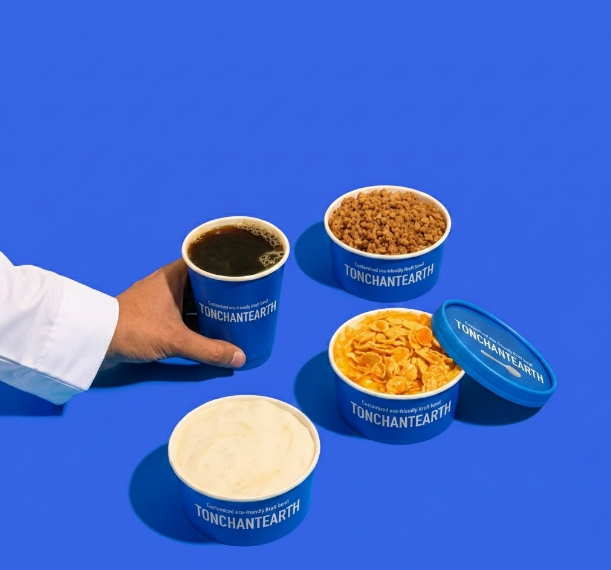
Insights & news
Go Green with Every Meal: Introducing Our 100% Biodegradable Kraft Paper Tableware Line
Walk through any commercial kitchen at 7:00 PM on a Friday. Orders are stacking up, kitchen lines are humming, and delivery drivers are pulling bags off the counter every thirty seconds. In that environment, nobody is thinking about environmental policy—they care about whether the bowl in front of them will hold 32 ounces of piping-hot ramen without collapsing or leaking grease through the bottom of a customer’s paper bag.
Yet behind that high-pressure kitchen line lies a massive industry transition. Single-use plastic bans are moving from localized city ordinances to national legislation. Extended Producer Responsibility (EPR) regulations are making packaging waste an actual line-item liability for restaurant chains. For packaging distributors, importers, and procurement directors, finding food containers that balance strict environmental standards with real-world kitchen performance is one of the toughest purchasing decisions on the agenda today.
That balance is exactly why kraft paper has become the benchmark for sustainable food service packaging.
This guide breaks down the technical reality of Kraft Paper Tableware—from raw fiber selection and barrier coatings to factory-floor converting, food-contact compliance, and the practical criteria buyers should evaluate before signing a supply contract.
What Is Kraft Paper Food Packaging?
At its simplest, kraft paper packaging refers to food containers, bowls, trays, meal boxes, and cups engineered from unbleached paperboard. The word kraft comes from the German word for strength, and that is not just marketing—it describes the mechanical toughness created during the pulping process.
Unlike white paperboard, which goes through extensive chemical bleaching to strip out color, unbleached kraft paperboard keeps its natural brown tone alongside the resilient wood fibers that give the material its structural integrity. That natural look does double duty: it visually signals environmental responsibility to the end consumer while retaining superior tear and burst resistance.
However, raw paper alone cannot hold lunch. Uncoated paperboard absorbs water and oil almost instantly. To transform raw board into functional Kraft Paper Food Packaging, manufacturers apply an internal sizing agent and a food-grade barrier coating—traditionally petroleum plastic, but increasingly renewable biopolymers or water-based dispersion coatings—creating a fluid-resistant barrier that handles greasy, wet, or steaming food without breaking down.
From Wood Fiber to Finished Container: The Manufacturing Process
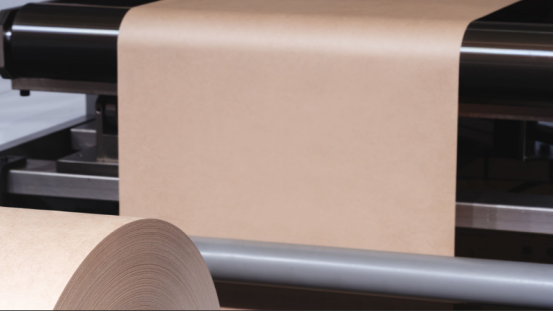
Understanding how kraft packaging is made helps procurement teams spot the difference between cheap, under-engineered containers and durable, compliant packaging. At Tonchant Earth’s manufacturing facilities, watching raw paper reels transform into precision-formed food bowls reveals just how much engineering goes into a seemingly simple paper dish.
1. Fiber Sourcing and Selection
It starts with wood. Long-fiber softwoods like pine and spruce, harvested from responsibly managed forests certified by the Forest Stewardship Council (FSC), form the foundation. Softwood fibers are significantly longer than hardwood fibers, creating a dense, interlocking mesh when formed into paperboard. This interlocking structure gives containers the backbone needed to hold heavy portions of food without sagging.
2. Chemical Kraft Pulping
Wood chips are cooked under high pressure in a digester using a solution of sodium hydroxide (NaOH) and sodium sulfide . This process gently dissolves lignin—the natural glue in wood that makes paper brittle—while preserving the long cellulose fibers. Because the pulp skips aggressive chlorine bleaching, the fibers remain intact, resulting in exceptional burst strength.
3. Forming and Calendering
The washed pulp slurry spreads onto a continuous moving wire screen where vacuum extraction and mechanical presses remove water. The damp fiber sheet then runs through steam-heated calendering rollers. This step sets the exact thickness (caliper), smooth surface finish, and target weight—typically between 230 GSM and 350 GSM for commercial food service containers.
4. Barrier Coating Application
To make the board liquid-proof and grease-resistant, a protective functional layer is applied:
Traditional PE Extrusion: A thin layer of polyethylene is melted onto the board. It works well against grease, but it binds plastic to paper, making the container non-compostable and difficult to recycle.
PLA Biopolymer Extrusion: Bio-based Polylactic Acid (derived from renewable cornstarch or sugarcane) is laminated onto the board. It provides an identical fluid barrier while keeping the container commercially compostable.
Aqueous Dispersion Coatings: A water-based barrier solution penetrates the surface fibers. This creates a Plastic-Free barrier that allows containers to degrade easily in home or industrial composting systems, or head straight into standard paper recycling streams.
Core Performance Metrics: How Kraft Paper Holds Up
Before deploying new packaging across fifty restaurant locations, purchasing managers need hard performance data. Here are the core metrics that define quality kraft packaging:
Structural Rigidity & Ring Crush Index
Thanks to unbleached softwood fibers, quality kraft paperboard delivers high ring crush resistance. In practical terms, this means stacked takeaway boxes won’t buckle under the weight of three meals resting on top of them during delivery.
Temperature Range (-20°C to 100°C)
Bio-lined kraft paperboard handles cold freezer storage without becoming brittle and withstands hot-fill foods up to 100°C. When heated in a microwave, advanced aqueous and PLA coatings stay stable without melting, degrading, or releasing chemical odors into the food.
Grease & Oil Resistance (Kit 8 to 12)
Grease resistance is measured using the 3M Kit Test, which rates oil penetration from 1 (low) to 12 (maximum). Quality bio-coated kraft containers achieve a Kit 8 to Kit 12 rating, ensuring that hot oils, animal fats, and heavy salad dressings won’t soak through the walls during a 60-minute delivery drive.
Tactile and Visual Appeal
The natural brown finish offers a clean, earthy look that consumers associate with sustainability. It also takes custom printing exceptionally well, allowing crisp logos and brand messaging to stand out on the unbleached background.
Real-World Buyer Scenarios: Where Kraft Packaging Delivers
To see why food service brands are making the switch, consider these common commercial challenges:
Scenario A: The Multi-Location Fast-Casual Salad Chain
The Challenge: A growing salad chain serving 5,000 meals daily faced two issues: oil from vinaigrettes was soaking through cheap paper bowls, and plastic lids were popping off during bike deliveries.
The Solution: Switching to 320 GSM kraft salad bowls with precision-rolled rims and PLA barrier linings solved both problems. The Kit 10 oil rating kept dressing contained, while the uniform rolled rims allowed clear lids to snap on tightly, eliminating spills and driver complaints.
Scenario B: The Ghost Kitchen & Delivery Specialist
The Challenge: A delivery-only brand packaging hot, steamed rice and curry needed containers that wouldn’t turn soggy or collapse when stacked inside delivery bags.
The Solution: Heavy-duty rectangular kraft meal boxes with vented lids maintained structural stiffness under steam pressure, allowing riders to stack four orders high without crushing the bottom meals.
Scenario C: The Eco-Conscious Corporate Caterer
The Challenge: An enterprise catering firm serving tech campuses needed to meet strict zero-waste mandates requiring all front-of-house packaging to be 100% commercially compostable.
The Solution: Adopting a full line of Eco-Friendly / Environmentally Friendly kraft paper platters, bowls, and cutlery helped them pass waste audits easily, diverting tons of food-soiled packaging away from landfills and straight into commercial composting bins.
Frequently Asked Questions
1. How long does bio-lined kraft paper tableware take to decompose?
In a commercial composting facility operating at around 58°C with proper moisture and microbial activity, PLA-lined and aqueous-coated kraft packaging breaks down into natural biomass, carbon dioxide, and water within 90 to 180 days, leaving no synthetic microplastics behind.
2. Can kraft paper bowls hold hot soup without leaking?
Yes. When manufactured with high-density paperboard (typically 300+ GSM) and a continuous, heat-sealed barrier lining, kraft soup tubs hold hot soups and broths up to 100°C without leaking, softening, or sweating through the bottom disc.
3. Is kraft packaging cost-competitive with traditional plastic containers?
While bio-based packaging was once significantly more expensive, rising petroleum resin prices, plastic pollution taxes, and scaled production have brought quality kraft paper tableware close to cost parity with high-grade PP and PET containers—especially when factoring in compliance and waste-management savings.
4. What is the difference between PLA coatings and aqueous dispersion coatings?
PLA (Polylactic Acid) is a renewable bio-plastic liner extruded onto the paperboard; it requires industrial composting conditions to break down completely. Aqueous dispersion coatings use a water-based polymer blend applied during paper making that creates a Plastic-Free fluid barrier. This allows containers to degrade in home compost bins or pass through standard paper recycling systems without extra processing.
5. Are kraft food boxes safe for microwave reheating?
Yes. Bio-lined kraft paper containers are microwave-safe for standard food reheating up to 100°C. Unlike polystyrene foam, which melts, or certain plastics that can leach chemicals under heat, quality kraft packaging retains its structural shape safely.
6. What minimum order quantities should buyers expect for custom-printed containers?
Standard, unprinted stock items are usually available in smaller carton quantities (10 to 20 cases). Fully customized die-cut containers with custom flexographic printing typically carry minimum order quantities starting at 30,000 to 50,000 pieces per size to optimize printing plate setups and line run efficiency.
Reliable Packaging for the Modern Food Service Industry
The move away from single-use plastics is not a temporary trend—it is a permanent shift in how food service operates globally. Choosing the right packaging partner means finding a supplier that combines sustainable raw materials with reliable, high-volume production quality.By working directly with an integrated manufacturer like Tonchantearth, distributors and enterprise restaurant brands secure certified, high-performance Kraft Paper Tableware engineered to protect hot meals, elevate brand presentation, and meet global sustainability standards.