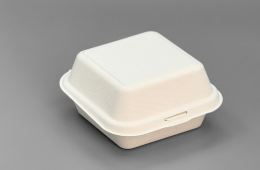

Bagasse vs Cornstarch Food Containers: Which Is Better?
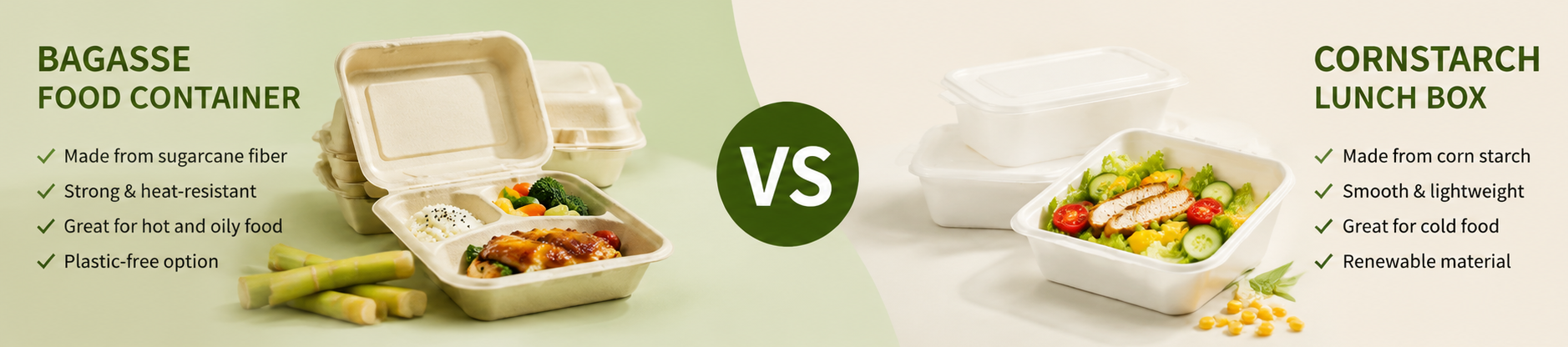
Introduction
As restaurants, food delivery brands, and catering companies continue to move away from traditional plastic packaging, choosing the right sustainable food container has become an important purchasing decision. Two popular alternatives in the market are bagasse food containers and cornstarch lunch boxes.
Both options are designed to reduce dependence on petroleum-based plastics and provide more environmentally responsible packaging solutions. However, they have different material characteristics, production processes, performance advantages, and cost considerations.
For buyers purchasing in bulk, the decision is not only about environmental benefits. Restaurant chains and distributors also need to consider practical factors such as heat resistance, oil resistance, stacking strength, customization options, certifications, MOQ requirements, and supply stability.
So, between bagasse food containers and cornstarch lunch boxes, which one is the better choice?
The answer depends on your application, market positioning, and business requirements.
This guide compares these two sustainable packaging materials to help food businesses, wholesalers, and packaging buyers make a more informed purchasing decision.
What Is It?
What Is a Bagasse Food Container?
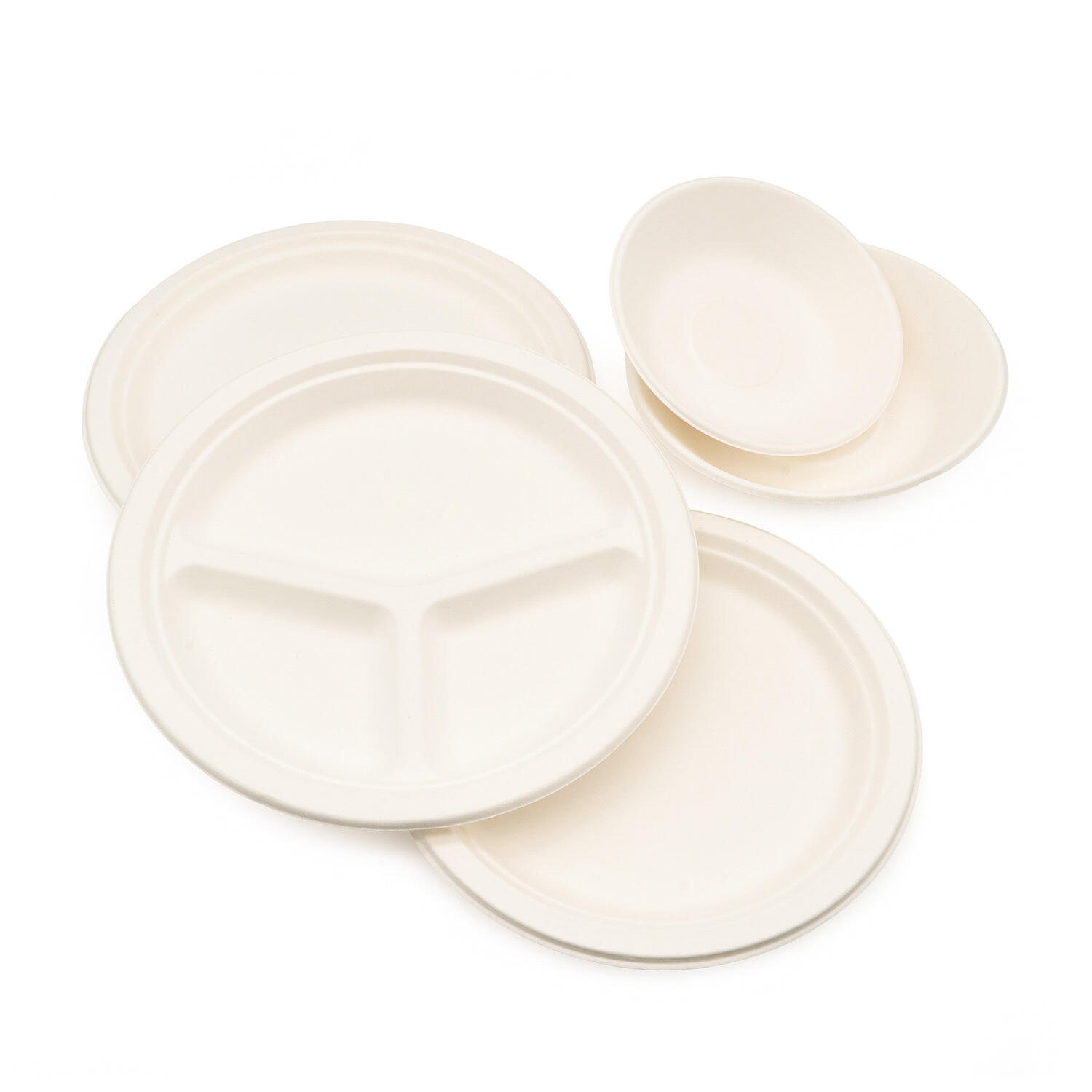
A bagasse food container is made from sugarcane fiber, also known as sugarcane pulp. Bagasse is the fibrous material left after sugarcane juice extraction. Instead of being treated as agricultural waste, it can be processed into molded fiber packaging products.
During manufacturing, cleaned sugarcane fibers are mixed with water, molded under heat and pressure, and dried into disposable food containers, trays, bowls, and takeaway boxes.
Because bagasse comes from a rapidly renewable agricultural resource, it has become one of the most widely used alternatives to traditional plastic food packaging.
Common bagasse products include:
Clamshell takeaway boxes
Burger boxes
Meal trays
Food bowls
Plates
Soup containers
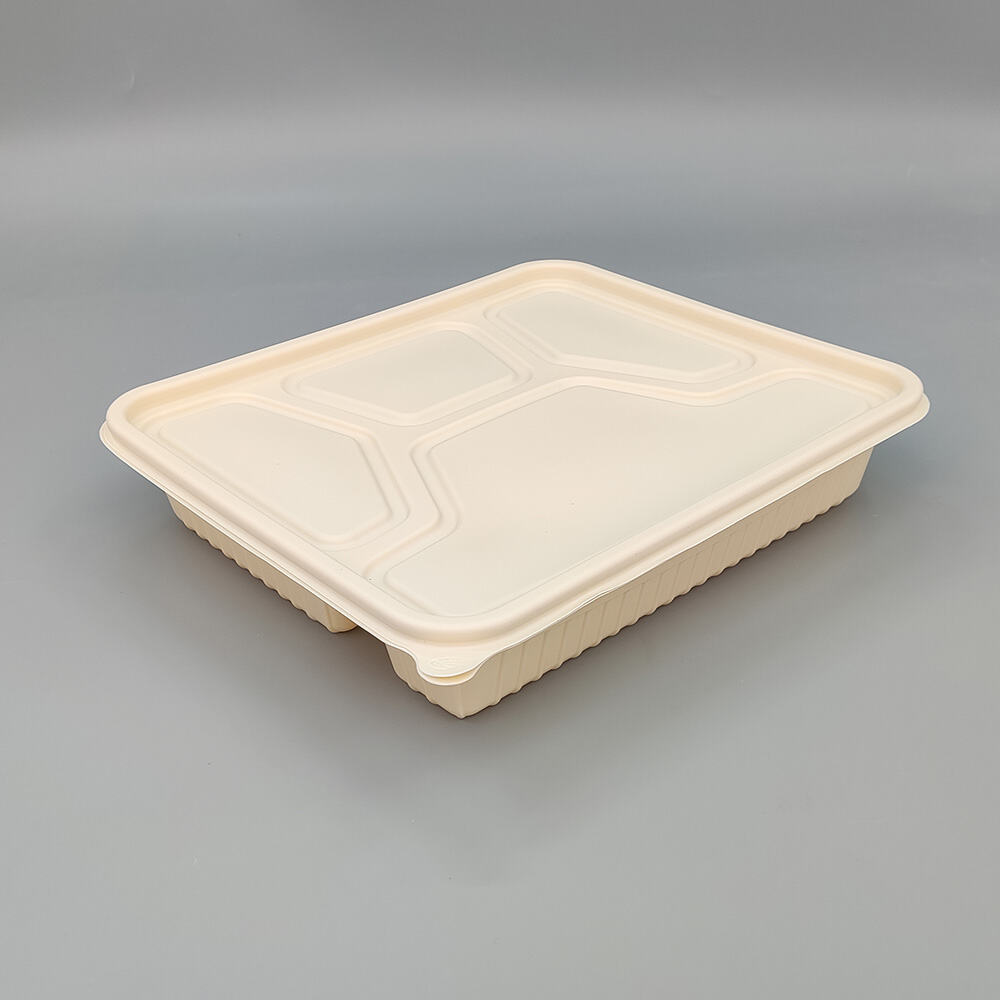
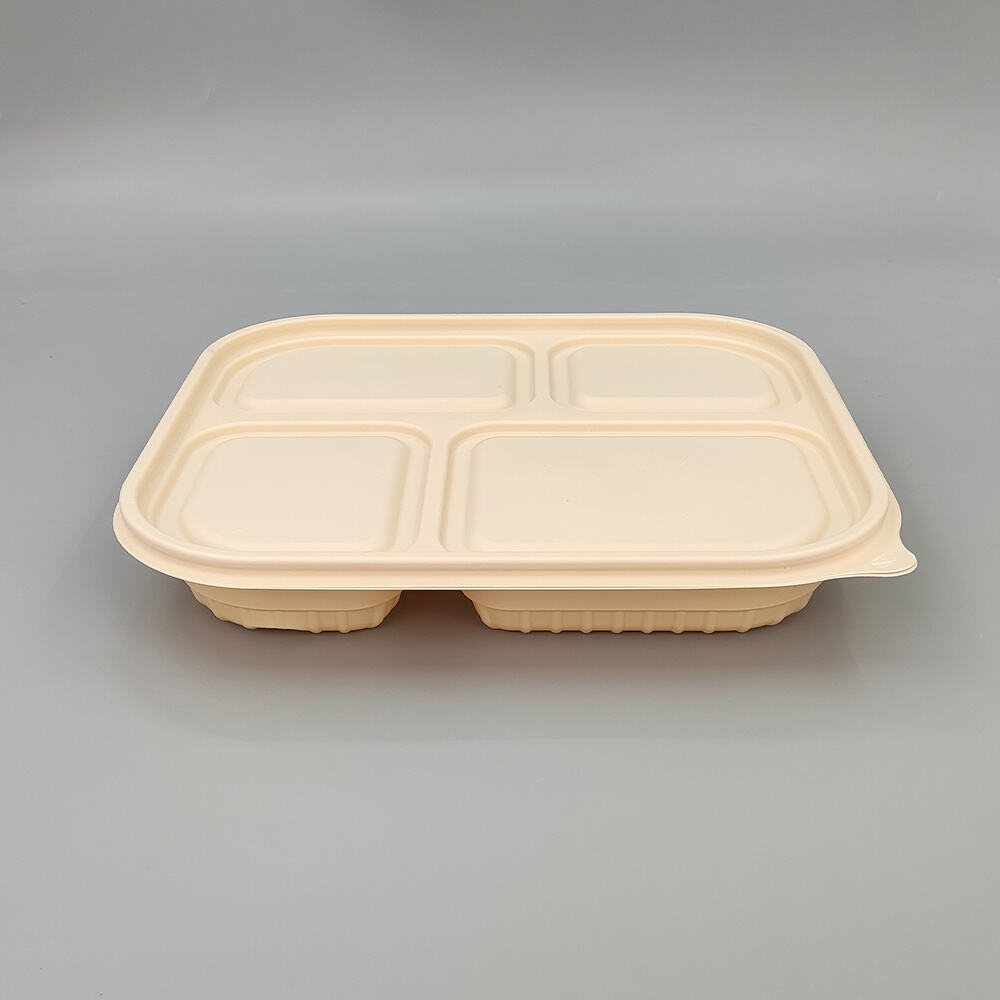
Compartments food trays
What Is a Cornstarch Lunch Box?
A cornstarch lunch box is produced using starch extracted from corn. The starch is processed into bioplastic materials, commonly known as PLA or starch-based polymers, which can be molded into disposable food packaging.
Unlike bagasse products, which are fiber-based, cornstarch packaging is a type of bio-based plastic alternative.
Cornstarch lunch boxes usually have a smooth surface similar to traditional plastic containers and are often used for:
Takeaway meals
Salad packaging
Cold food packaging
Bakery products
Ready-to-eat meals
Cornstarch packaging is attractive because it offers a plastic-like appearance while being made from renewable resources.
Material Comparison
| Feature | Bagasse Food Container | Cornstarch Lunch Box |
|---|---|---|
| Main Material | Sugarcane fiber pulp | Corn starch-based bioplastic |
| Material Type | Molded fiber | Bio-based polymer |
| Appearance | Natural fiber texture | Smooth plastic-like surface |
| Renewable Source | Sugarcane waste | Corn crops |
| Typical Color | White or natural beige | Usually white or translucent |
| Compostability | Industrial composting recommended depending on certification | Depends on formulation and certification |
| Plastic-Free Option | Yes | Usually no (unless specific formulation) |

Key Benefits
Benefits of Bagasse Food Containers
1. Strong Environmental Story
One of the biggest advantages of bagasse packaging is its connection to agricultural waste recycling.
Sugarcane processing generates large amounts of bagasse. Turning this material into food packaging helps create value from an existing by-product.
For businesses that want to communicate sustainability to customers, bagasse packaging provides a clear environmental message:
Made from renewable plant fiber
Plastic-free option
Suitable for compostable packaging programs
Many restaurants and food brands choose bagasse because customers can easily understand the material story.
2. Excellent Heat Resistance
Bagasse food containers perform well with hot food applications.
They are commonly used for:
Rice dishes
Fried food
Pasta
Burgers
Hot meal delivery
Most quality bagasse products can handle hot foods without becoming soft or losing structure.
This makes them especially suitable for food delivery companies where packaging needs to maintain quality during transportation.
3. Good Oil and Water Resistance
Modern bagasse containers are usually treated with food-safe coatings to improve performance.
They can handle:
Sauces
Greasy foods
Soups
Moist meals
For example, restaurants selling fried chicken or curry dishes often prefer bagasse containers because they provide better rigidity compared with many paper-based alternatives.
4. Strong Structural Performance
Bagasse products have a natural fiber structure, giving them good strength.
Advantages include:
Easy stacking
Less deformation during transportation
Better protection for takeaway meals
This is important for wholesalers and restaurant chains purchasing large quantities.
Benefits of Cornstarch Lunch Boxes
1. Plastic-Like Appearance
Cornstarch lunch boxes provide a smooth and clean appearance.
This can be attractive for:
Premium takeaway brands
Salad shops
Cafés
Meal preparation companies
The surface looks closer to conventional plastic packaging, which some customers associate with higher quality.
2. Lightweight and Easy to Handle
Cornstarch packaging is usually lightweight, which can reduce transportation costs in some cases.
For distributors managing large inventories, weight efficiency can be an important factor.
3. Suitable for Cold Food Applications
Cornstarch packaging is often selected for:
Salads
Fruits
Desserts
Cold meals
Display packaging
For applications where visual presentation matters, cornstarch containers can provide a clean appearance.
Performance Comparison
| Performance | Bagasse Food Container | Cornstarch Lunch Box |
|---|---|---|
| Hot Food | Excellent | Moderate |
| Cold Food | Excellent | Excellent |
| Oil Resistance | Excellent | Good |
| Microwave Use | Usually suitable (check supplier specification) | Depends on product design |
| Freezer Use | Good | Good |
| Stacking Strength | Excellent | Good |
| Premium Appearance | Natural eco look | Plastic-like appearance |
Applications
Restaurant and Food Delivery
Food delivery companies usually prioritize durability and leakage prevention.
Bagasse food containers are commonly selected for:
Fast food
Fried chicken restaurants
Burger brands
Asian cuisine
Catering services
The rigid structure helps protect food quality during delivery.
Catering and Events
Large catering companies often need packaging that is:
Reliable
Stackable
Easy to dispose of
Environmentally responsible
Bagasse trays and containers are popular choices for large events, corporate catering, and outdoor activities.
Supermarkets and Ready Meals
Cornstarch lunch boxes can be suitable for supermarkets and prepared meal businesses.
Typical applications include:
Fresh salads
Cold meal kits
Bakery products
Refrigerated food
Their transparent or smooth appearance can help product presentation.
Industry Examples
Restaurant Chains
Large restaurant groups often choose bagasse packaging because they need:
Consistent quality
Stable supply
Custom branding
Compliance documentation
For example, a burger chain may select custom printed bagasse burger boxes with their logo and brand colors.
Food Delivery Platforms
Delivery businesses usually focus on:
Leak resistance
Heat retention
Transportation durability
Bagasse containers are often preferred for hot meal delivery.
Packaging Distributors
Distributors usually consider:
MOQ flexibility
Product range
Certification availability
Container sizes
Working with manufacturers that can provide multiple sizes and customization options can simplify purchasing.
Tonchant Earth provides sustainable packaging solutions including customized bagasse food containers for different foodservice applications, helping businesses develop packaging that matches their brand requirements.
Buying Guide
1. Consider Your Food Application
Before choosing a material, buyers should evaluate the actual usage.
Ask:
Is the food hot or cold?
Does it contain oil or sauce?
How long does delivery take?
Does the container need compartments?
Is microwave use required?
For hot and oily meals, bagasse is usually the safer choice.
For cold food display applications, cornstarch packaging may be suitable.
2. Check MOQ Requirements
MOQ is one of the most common concerns for buyers.
Many customers ask:
“Can we start with only 500 pieces for a custom order?”
For standard products, some suppliers may offer lower quantities depending on inventory availability.
However, customized production usually requires higher MOQs because manufacturers need to arrange:
Raw material preparation
Production scheduling
Mold setup
Printing preparation
Quality inspection
Typical MOQ considerations:
| Product Type | Common MOQ Range |
|---|---|
| Stock bagasse containers | Lower MOQ possible |
| Custom size bagasse products | Usually higher MOQ |
| Custom printed packaging | Often 5,000+ pcs depending on design |
| Custom molds | Higher investment required |
For small businesses testing a new product, starting with standard sizes may be more cost-effective.
3. Customization Options
Many brands now view packaging as part of their marketing.
Common customization options include:
Logo Printing
Businesses can add:
Brand logo
Company name
Sustainability message
Custom Sizes
Restaurants with special meals may require:
Larger trays
Different compartments
Unique shapes
Packaging Design
Customization can include:
Sleeve packaging
Printed cartons
Individual wrapping
Tonchant Earth works with buyers who need customized sustainable packaging solutions, including logo printing and packaging design support.
4. Certification Considerations
Before purchasing compostable packaging, buyers should confirm available certifications.
Common certifications include:
| Certification | Purpose |
|---|---|
| BPI Certification | Compostability standard in North America |
| EN 13432 | European compostability standard |
| ASTM D6400 | Compostable plastics standard |
| Food Contact Certification | Ensures suitability for food use |
Certification requirements vary depending on your target market.
A distributor selling in Europe may require different documentation compared with a restaurant operating locally.
Always confirm certification requirements before placing large orders.
Common Buyer Concerns
“Is bagasse really compostable?”
Yes, bagasse products are generally compostable when they meet appropriate standards and are processed under suitable composting conditions.
However, buyers should always check supplier certifications rather than relying only on marketing claims.
“Will bagasse containers leak?”
High-quality bagasse containers have good water and oil resistance.
However, performance depends on:
Material quality
Product thickness
Coating technology
Food temperature
Usage time
For very liquid foods, buyers should request samples before bulk production.
“Are cornstarch lunch boxes cheaper than bagasse?”
Pricing depends on:
Raw material cost
Order quantity
Product design
Shipping distance
Certification requirements
In many cases, bagasse has become highly competitive because of mature production technology and large-scale manufacturing.
“Can I customize packaging with my brand?”
Yes.
Many suppliers offer:
Custom printing
Custom sizes
Custom packaging
Private labeling
However, customization usually requires higher MOQ compared with standard products.
“Which one is better for my business?”
There is no universal winner.
Choose bagasse if you need:
Hot food packaging
Strong containers
Plastic-free positioning
Restaurant delivery applications
Choose cornstarch if you need:
Smooth appearance
Cold food packaging
Lightweight solutions
Display-friendly containers
FAQ
1. Are bagasse food containers better than plastic containers?
For many foodservice applications, bagasse containers provide a more sustainable alternative because they are made from renewable fiber and can reduce dependence on traditional plastic packaging.
2. Can bagasse food containers be used for hot food?
Yes. Bagasse containers are commonly used for hot meals, including rice dishes, burgers, fried foods, and takeaway meals.
3. Are cornstarch lunch boxes biodegradable?
Cornstarch lunch boxes can be biodegradable or compostable depending on their material formulation and certification. Buyers should check product documentation before purchasing.
4. What is the typical MOQ for customized sustainable food containers?
MOQ depends on product type, size, printing requirements, and supplier production process. Standard items usually have lower MOQs, while customized products require larger quantities.
5. Can sustainable food containers include custom logos?
Yes. Many manufacturers provide logo printing and customized packaging services for restaurants, distributors, and food brands.
Conclusion
Both bagasse food containers and cornstarch lunch boxes offer advantages compared with traditional plastic packaging.
However, the better choice depends on your business needs.
For restaurants, catering companies, and food delivery brands handling hot meals, bagasse food containers are often the preferred solution because of their strength, heat resistance, and natural fiber advantages.
For businesses focusing on cold foods and premium presentation, cornstarch lunch boxes can be an attractive option.
When selecting sustainable packaging, buyers should evaluate more than just material type. Product performance, certification, MOQ, customization capability, and supplier reliability all play important roles.
Choosing the right packaging partner can help businesses create a practical solution that meets both customer expectations and sustainability goals. Tonchant Earth supports global food businesses with customized eco-friendly packaging solutions designed for modern foodservice needs.
Recommended Products
 Hot News
-
What Materials Are Used in Eco-Friendly Tableware?
2026-08-26
-
How Compostable Food Packaging Is Made: From Plant Fiber to Finished Product
2026-08-20
-
What Is Bagasse and Why Is It Used in Food Packaging?
2026-07-29
-
Bagasse vs Cornstarch Food Containers: Which Is Better?
2026-07-23
-
Compostable Tableware vs Biodegradable Tableware: A Complete Buying Guide for Sustainable Food Packaging Buyers
2026-07-21
-
Complete ASTM D6400 Certification Guide: What Importers and Food Packaging Buyers Must Know
2026-07-13