
EN13432 Certification Explained: A Complete Guide for Sustainable Packaging Buyers
As sustainability becomes a global priority, more food packaging buyers are looking for environmentally responsible alternatives to traditional plastic packaging. Compostable packaging made from materials such as PLA, cornstarch, sugarcane bagasse, and other bio-based materials is becoming increasingly popular among restaurants, coffee brands, food distributors, and retailers.
However, not all products labeled as “compostable” are the same. For importers and distributors, choosing the right packaging supplier requires understanding internationally recognized standards. One of the most important certifications in the compostable packaging industry is EN13432 Certification.
EN13432 Certification is a European standard that proves a packaging product is industrially compostable and biodegradable under specific testing conditions. It helps buyers confirm that a product has passed strict scientific evaluations instead of relying only on environmental marketing claims. For food packaging buyers, understanding this certification can reduce compliance risks, improve product credibility, and support sustainable business development.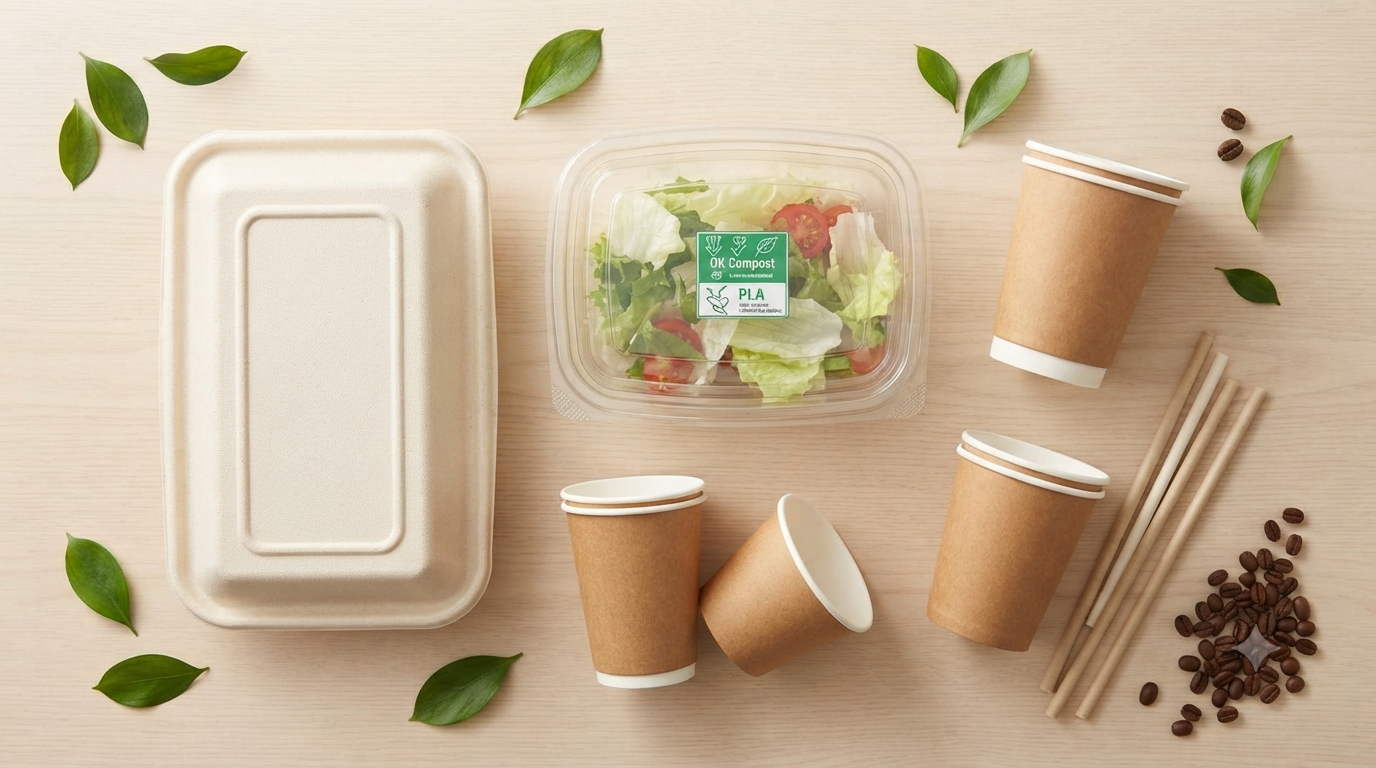
What Is EN13432 Certification?
EN13432 Certification is a European standard that defines the requirements for packaging products that can be considered compostable and recoverable through organic recycling. The standard is officially called: “EN 13432: Requirements for packaging recoverable through composting and biodegradation.”
It was developed to provide a clear technical framework for evaluating compostable packaging materials. Unlike general environmental labels, EN13432 Certification focuses on measurable performance. A product must prove that it can safely break down in an industrial composting environment without leaving harmful residues.
For example, a traditional plastic food container may remain in the environment for hundreds of years. In comparison, a certified compostable container made from sugarcane bagasse or PLA can break down into carbon dioxide, water, and biomass under controlled composting conditions.
This certification is especially important for:
Food packaging manufacturers
Coffee packaging suppliers
Restaurant packaging distributors
Importers of sustainable products
Retail brands looking for eco-friendly packaging solutions
For buyers, EN13432 Certification provides confidence that the packaging meets recognized European compostability requirements.
Who Issues EN13432 Certification?
EN13432 itself is not issued directly by the European Union. Instead, certification is provided by independent third-party certification organizations that conduct testing and verification. Common certification organizations include:
TÜV Austria
DIN CERTCO
Other accredited laboratories and certification agencies
These organizations evaluate whether packaging products meet the requirements defined by EN13432. The certification process usually includes material testing, laboratory analysis, compostability evaluation, documentation review, and certification approval.
A packaging supplier cannot simply print “EN13432 Certified” on products without supporting documentation. The certification must be linked to specific materials, products, or manufacturing systems. For example, a PLA drinking straw manufacturer may receive EN13432 certification for its PLA material. However, this does not automatically mean every product from that factory is certified unless the product design and material structure are included within the certification scope. This is why professional buyers should always request certification documents before placing large orders.
Requirements for EN13432 Certification
To achieve EN13432 Certification, packaging products must pass several important technical requirements. The standard evaluates four main areas:
1. Disintegration Testing
The first requirement is physical breakdown during composting. The packaging sample is placed into industrial composting conditions with controlled temperature, humidity, microorganisms, and oxygen levels. The product must break apart into small pieces within the required timeframe. For example, a compostable coffee cup lid made from PLA must demonstrate that it can physically disintegrate during composting instead of remaining as visible plastic fragments.
2. Biodegradation Testing
The second requirement is biological decomposition. The material must be converted by microorganisms into natural substances, mainly carbon dioxide, water, and biomass. The testing measures how much carbon dioxide is produced during biodegradation compared with a reference material. This requirement prevents manufacturers from falsely claiming that materials are biodegradable simply because they break into smaller pieces.
3. Heavy Metal and Toxicity Testing
Compostable packaging must not introduce harmful substances into compost. EN13432 certification checks the concentration of specific heavy metals, including lead, mercury, cadmium, and chromium. The final compost must remain safe for plants and soil. For food packaging buyers, this requirement is particularly important because packaging materials may come into direct contact with food products.
4. Ecotoxicity Testing
The remaining compost after degradation must not negatively affect plant growth. Laboratories test whether compost containing degraded packaging materials can support healthy plant development. This ensures that compostable packaging contributes to a circular economy rather than creating another environmental problem.
EN13432 Certification Testing Process
For importers and packaging buyers, understanding the testing process helps evaluate suppliers more effectively. The typical certification process includes the following stages:
Step 1: Product Material Review
The certification organization first reviews raw materials, additives, the production process, and product structure. For example, a PLA coffee capsule, PLA tea bag, or compostable food packaging products must provide detailed information about every material layer. Multi-layer products require special attention because each component must meet compostability requirements.
Step 2: Laboratory Testing
Certified laboratories conduct scientific testing based on EN13432 requirements. Testing usually includes chemical analysis, disintegration tests, biodegradation tests, and ecotoxicity tests. The complete testing process may take several months depending on product complexity.
Step 3: Certification Approval
After successful testing, the certification organization reviews all results. If the product meets EN13432 requirements, the manufacturer receives certification approval and can use it as evidence when selling compostable packaging products internationally.
Benefits of EN13432 Certification for Packaging Buyers
For importers, distributors, and food packaging buyers, choosing certified compostable packaging provides more than environmental advantages. It creates commercial value, reduces compliance risks, and improves customer trust.
1. Supports Market Access and Compliance
One of the biggest advantages of EN13432 Certification is that it helps companies meet sustainability expectations in European and international markets. Many countries and regions are introducing stricter regulations on single-use plastics and waste management. Buyers importing food packaging products need to ensure that their suppliers can provide recognized environmental certifications. For example, a distributor supplying sustainable packaging solutions for restaurants may need proof that products comply with recognized standards. Without proper certification, products may face import challenges, customer rejection, and loss of brand credibility.
2. Builds Customer Trust
Consumers are increasingly interested in sustainable products, but many are confused by environmental claims like “eco-friendly,” “green,” or “natural.” A certified product gives customers more confidence because environmental performance has been tested by an independent organization, improving customer loyalty, brand reputation, and sustainability image.
3. Reduces Greenwashing Risks
Greenwashing happens when companies make environmental claims that are unclear, exaggerated, or unsupported. For packaging buyers, purchasing uncertified “compostable” products creates risks. By requiring EN13432 Certification documents, buyers can reduce the possibility of purchasing products that do not meet their sustainability goals.
4. Supports Sustainable Brand Development
Many companies are building long-term sustainability strategies. Certified compostable packaging can support businesses such as coffee roasters, organic food brands, catering companies, restaurants, and beverage companies. For example, a specialty coffee company focusing on eco-friendly coffee packaging applications can choose compostable drip coffee bags or pouches to strengthen its sustainable market positioning.
How Buyers Can Verify EN13432 Certification
Before purchasing compostable packaging, buyers should carefully verify certification information through these steps:
Request the Original Certificate: Ask the supplier for the official certificate, ensuring it includes the organization name, certificate number, manufacturer info, product details, and validity period.
Check Certification Scope: Confirm whether the exact product you are buying—such as EN13432 certified PLA straws—is explicitly covered under the certificate scope.
Verify Through Certification Organizations: Use online databases provided by bodies like TÜV Austria or DIN CERTCO to check the certificate number, company name, and status.
Review Material Structure: Ensure that multi-layer packaging (like compostable coffee packaging solutions) has all components evaluated and certified together.
Common Mistakes Buyers When Purchasing Compostable Packaging
Even experienced importers sometimes make mistakes when sourcing compostable packaging:
Mistake 1: Confusing biodegradable materials with strictly compostable materials.
Mistake 2: Trusting unverified “eco-friendly” or “green” marketing claims without paperwork.
Mistake 3: Checking only the raw material resin instead of testing the finished product structure.
Mistake 4: Ignoring local composting conditions, assuming packaging will degrade in home gardens or oceans.
Mistake 5: Choosing suppliers solely based on low price while sacrificing valid certification documentation.
Why Choose Tonchant Earth for Certified Sustainable Packaging?
As sustainability requirements continue to grow worldwide, choosing the right packaging partner is essential. Tonchant Earth provides sustainable packaging solutions for global food, beverage, and coffee businesses. Our eco-friendly packaging range includes compostable food containers, PLA-based products, sustainable coffee packaging, tea packaging solutions, and customized environmentally friendly packaging.
We support businesses with custom sizes and designs, low MOQ options, professional solutions, and extensive export experience. Contact Tonchant Earth today to discuss your sustainable packaging project and request a customized solution.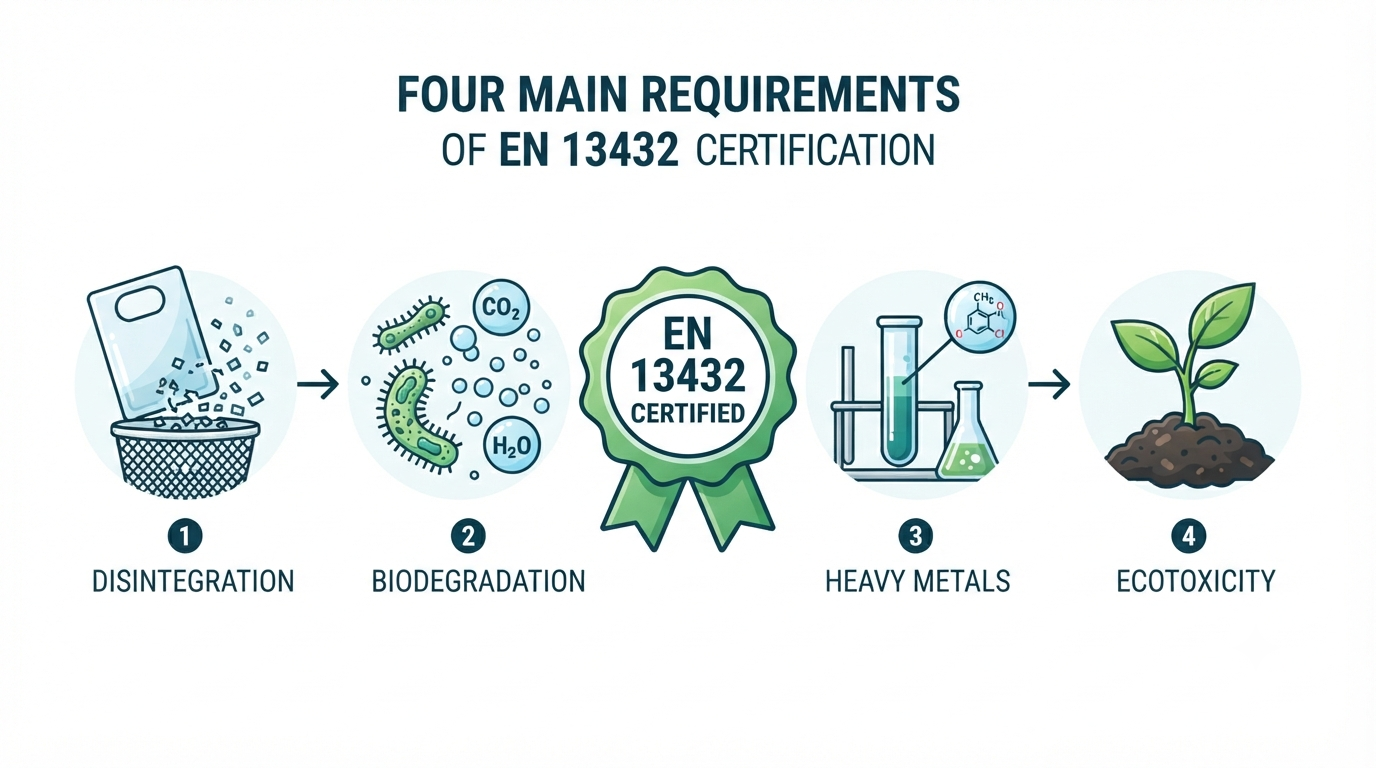
Frequently Asked Questions (FAQ)
1. What does EN13432 Certification mean?
EN13432 Certification proves that a packaging product meets European requirements for industrial compostability. It confirms that the product can disintegrate, biodegrade, and produce compost without harmful effects when processed under suitable composting conditions.
2. Is EN13432 Certification the same as biodegradable certification?
No. Biodegradable means a material can break down naturally, while compostable means it breaks down under specific composting conditions and produces safe compost. EN13432 Certification specifically evaluates compostable packaging products.
3. Does EN13432 certified packaging compost at home?
Usually, no. EN13432 Certification mainly applies to industrial composting environments where temperature, moisture, oxygen, and microorganisms are carefully controlled. Home composting requires different testing standards.
4. How can I check if a supplier’s EN13432 certificate is real?
Buyers should request the original certificate, check the certification body, confirm the certificate number, and verify that the certified product matches the packaging being purchased.
5. What products can have EN13432 Certification?
Many packaging products can be certified, including PLA straws, compostable food containers, compostable bags, coffee packaging, tea packaging, and disposable tableware. The certification depends on the complete product structure and materials used.
Recommended Products

 Hot News
-
What Materials Are Used in Eco-Friendly Tableware?
2026-08-26
-
How Compostable Food Packaging Is Made: From Plant Fiber to Finished Product
2026-08-20
-
What Is Bagasse and Why Is It Used in Food Packaging?
2026-07-29
-
Bagasse vs Cornstarch Food Containers: Which Is Better?
2026-07-23
-
Compostable Tableware vs Biodegradable Tableware: A Complete Buying Guide for Sustainable Food Packaging Buyers
2026-07-21
-
Complete ASTM D6400 Certification Guide: What Importers and Food Packaging Buyers Must Know
2026-07-13