
What Materials Are Used in Eco-Friendly Tableware?
Introduction
The term eco-friendly tableware covers a much wider range of materials than many buyers realize.
For restaurant chains, foodservice distributors, importers and wholesalers, replacing conventional plastic plates, bowls and containers is not simply a matter of choosing something labeled "green." Different materials have different raw-material sources, manufacturing processes, strength characteristics, temperature resistance, compostability profiles and regulatory requirements.
The most common eco friendly tableware materials today include sugarcane bagasse, bamboo fiber, wood pulp, paper and paperboard, PLA and other plant-based or compostable materials. Some are molded from agricultural fibers; others are processed as biopolymers or paper-based structures.
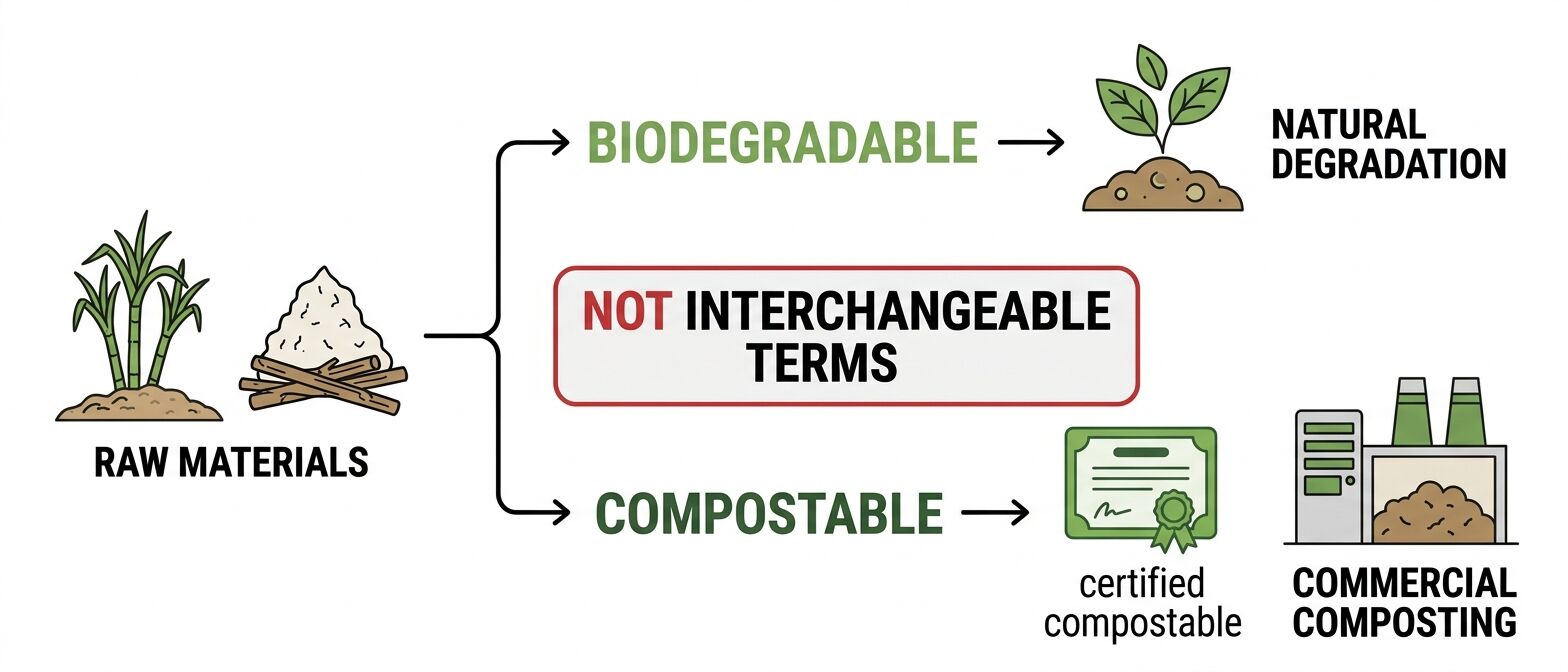
More importantly, biobased, biodegradable and compostable are not interchangeable terms. A product can be made from renewable resources without being compostable, while a compostable product may require controlled commercial composting conditions rather than breaking down in a backyard compost bin.
Food-contact safety is another independent consideration. In the European Union, food-contact materials—including packaging, kitchenware and tableware—must comply with Regulation (EC) No 1935/2004 and applicable specific legislation and Good Manufacturing Practices. In the United States, food-contact substances are subject to FDA requirements based on their intended use and regulatory status.
This guide examines the major materials used in sustainable tableware and explains what professional buyers should evaluate before placing an order.
What Is Each Material?
There is no single material that defines sustainable tableware. The following categories represent some of the most widely used options.
1. Sugarcane Bagasse
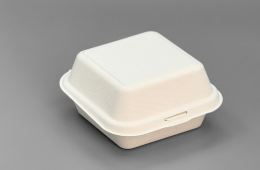
Bagasse is the fibrous residue left after sugarcane is processed for juice or sugar. Rather than treating this fiber as a low-value agricultural residue, manufacturers can process it into pulp and mold it into foodservice products.
Typical products include:
Plates
Bowls
Burger boxes
Clamshell containers
Food trays
Meal boxes
Bagasse is particularly common in disposable foodservice because it combines plant-fiber sourcing with relatively good structural performance.
2. Bamboo Fiber
Bamboo fiber tableware uses bamboo-derived fiber as a primary raw material, although the exact formulation varies between products and manufacturers.
Bamboo is a rapidly renewable plant resource, making it attractive to brands that want a strong natural-material story.
Typical products include:
Plates
Bowls
Trays
Serving dishes
Food containers
Buyers should always request the actual material composition. "Bamboo fiber" does not necessarily mean a product is made exclusively from bamboo.
3. Wood Pulp and Molded Fiber
Wood pulp and other cellulose fibers can be processed into molded-fiber tableware and packaging.
These materials can provide good rigidity while allowing manufacturers to create different shapes and structures.
Molded fiber is commonly used for:
Plates
Bowls
Trays
Food containers
Protective packaging
The source of the fiber, additives and processing method all influence the final environmental profile.
4. Paper and Paperboard
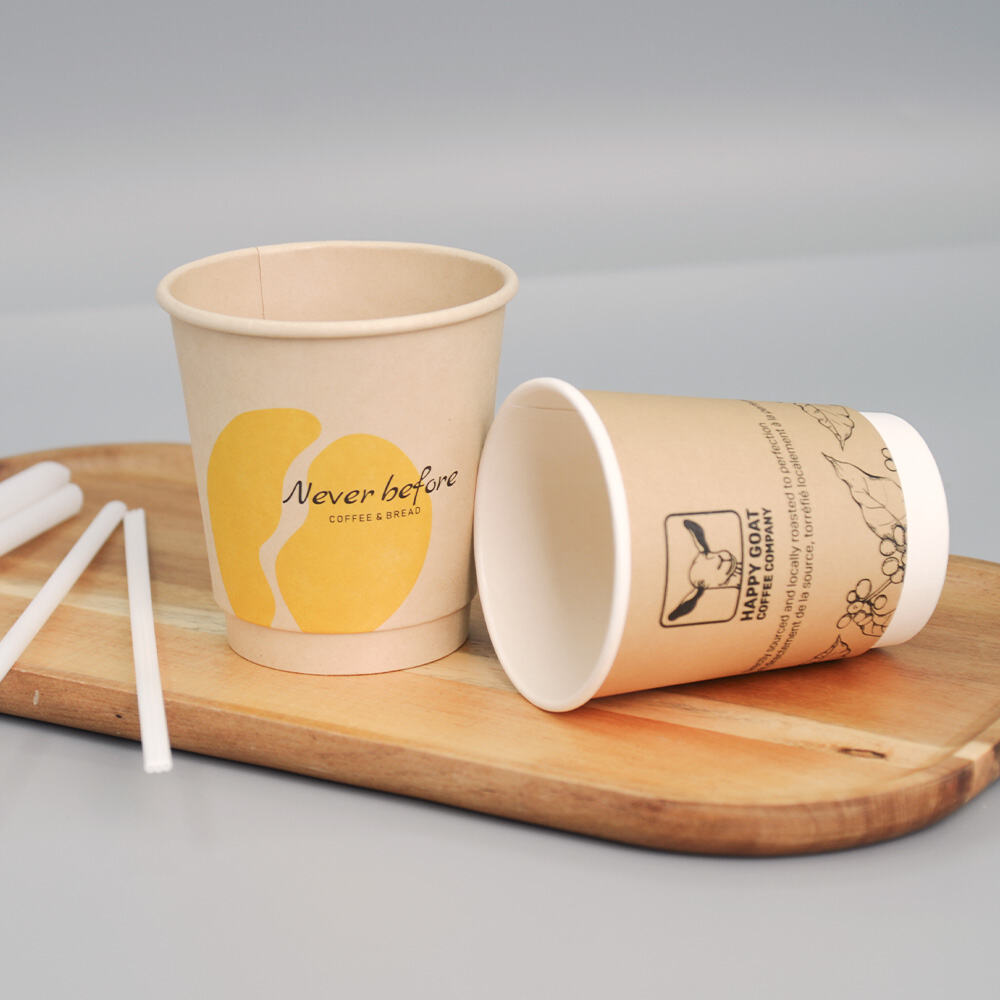
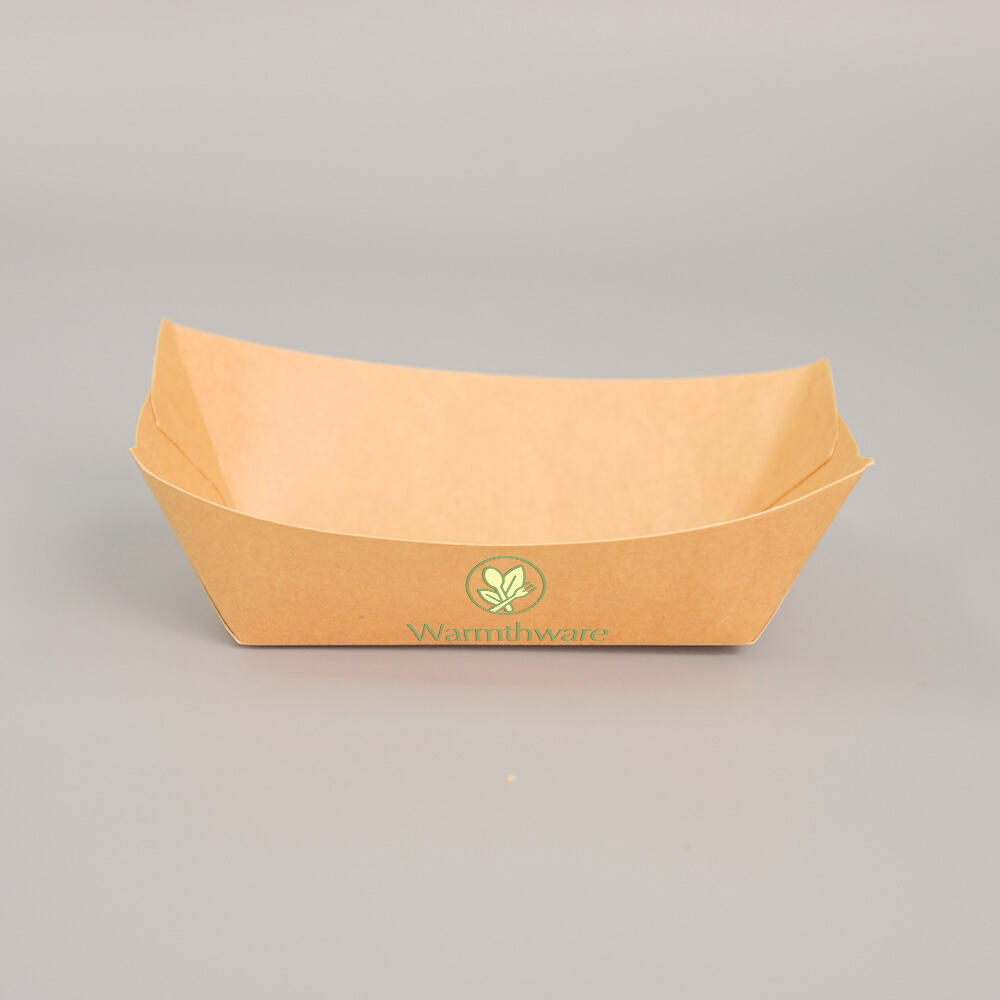
Paper and paperboard remain important sustainable packaging materials, especially for cups, food boxes, sandwich packaging, trays and takeaway containers.
Paper itself is cellulose-based and recyclable in many systems, but foodservice products can become more complicated when coatings, adhesives, inks or barrier layers are added.
This is particularly relevant for grease and moisture resistance.
In the United States, the FDA notes that food-contact substances can include materials and substances applied to packaging surfaces, such as adhesives and colorants.
5. PLA
PLA, or polylactic acid, is a biobased polymer commonly manufactured from renewable carbohydrate sources.
It can be processed into products such as:
Cold cups
Lids
Containers
Films
Cutlery
PLA is often associated with compostable packaging, but buyers should distinguish between PLA as a material and a finished product certified as compostable.
Commercial compostability certification generally involves testing the finished product against defined requirements rather than assuming that every PLA item has the same end-of-life characteristics.
How Is Each Material Produced?
Understanding manufacturing helps buyers evaluate quality and environmental claims.
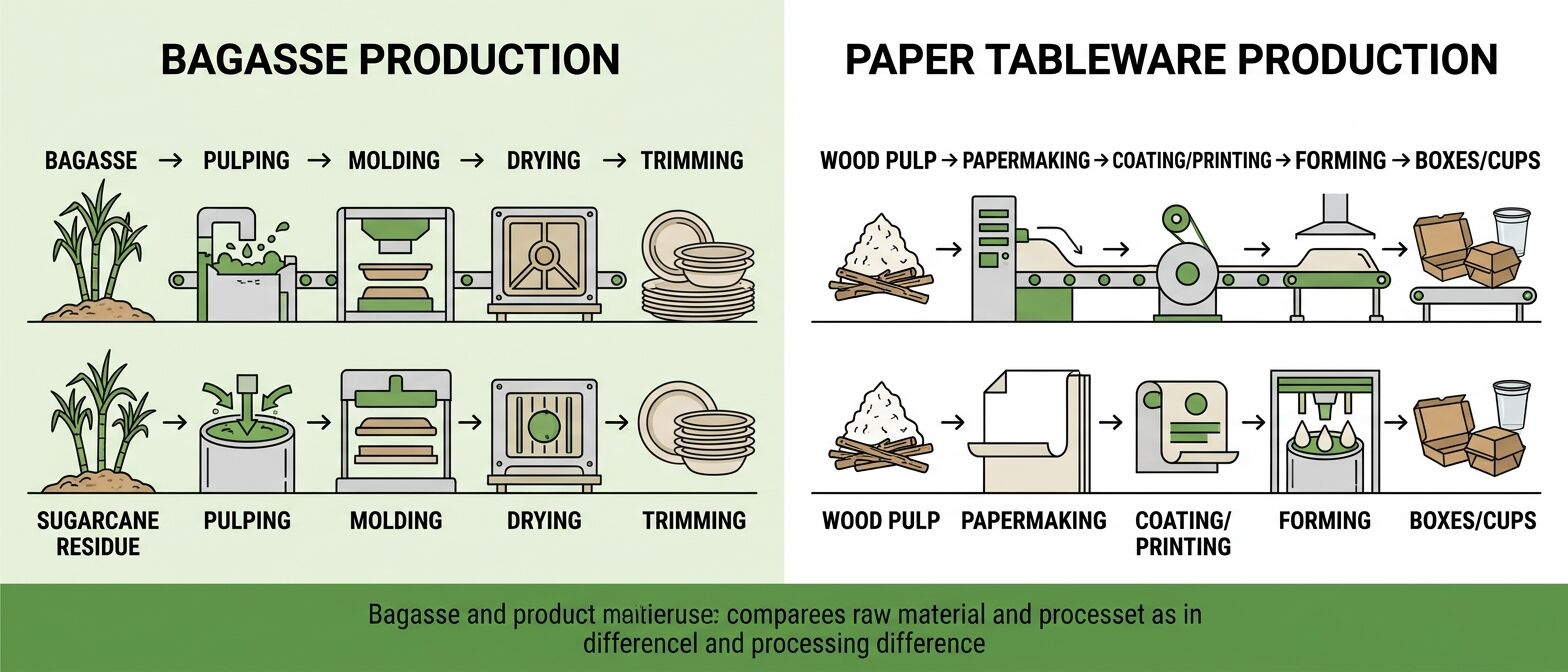
Bagasse and Bamboo Fiber Production
Plant fibers are generally cleaned, processed and converted into pulp before molding.
A simplified manufacturing sequence is:
Plant fiber → cleaning → pulping → refining → pulp preparation → molding → hot pressing/drying → trimming → inspection → packing
The pulp is mixed with water and formed into the required shape using molds. Heat and pressure help remove moisture and establish the final geometry.
The mold itself is important. A well-designed mold can improve rigidity without simply increasing material weight.
For high-volume products such as plates and bowls, production efficiency has a direct effect on unit cost.
Paper Tableware Production
Paper and paperboard products generally involve:
Pulp preparation → papermaking → coating or treatment → printing → die cutting → folding/forming → inspection → packing
Depending on the application, the paper may receive a barrier coating to improve resistance to liquids or grease.
This is one reason buyers should not evaluate paper products based only on the paper grade. The complete structure—including coating and adhesives—determines food-contact and end-of-life characteristics.
PLA Production
PLA manufacturing begins with a biobased feedstock that is processed into chemical intermediates and eventually polymerized into PLA resin.
The resin can then be converted into finished products using processes such as:
Extrusion
Thermoforming
Injection molding
For transparent cold cups, thermoforming is one possible production route.
The finished product's thickness, design and processing conditions all influence performance.
Key Properties and Characteristics
Different materials solve different packaging problems.
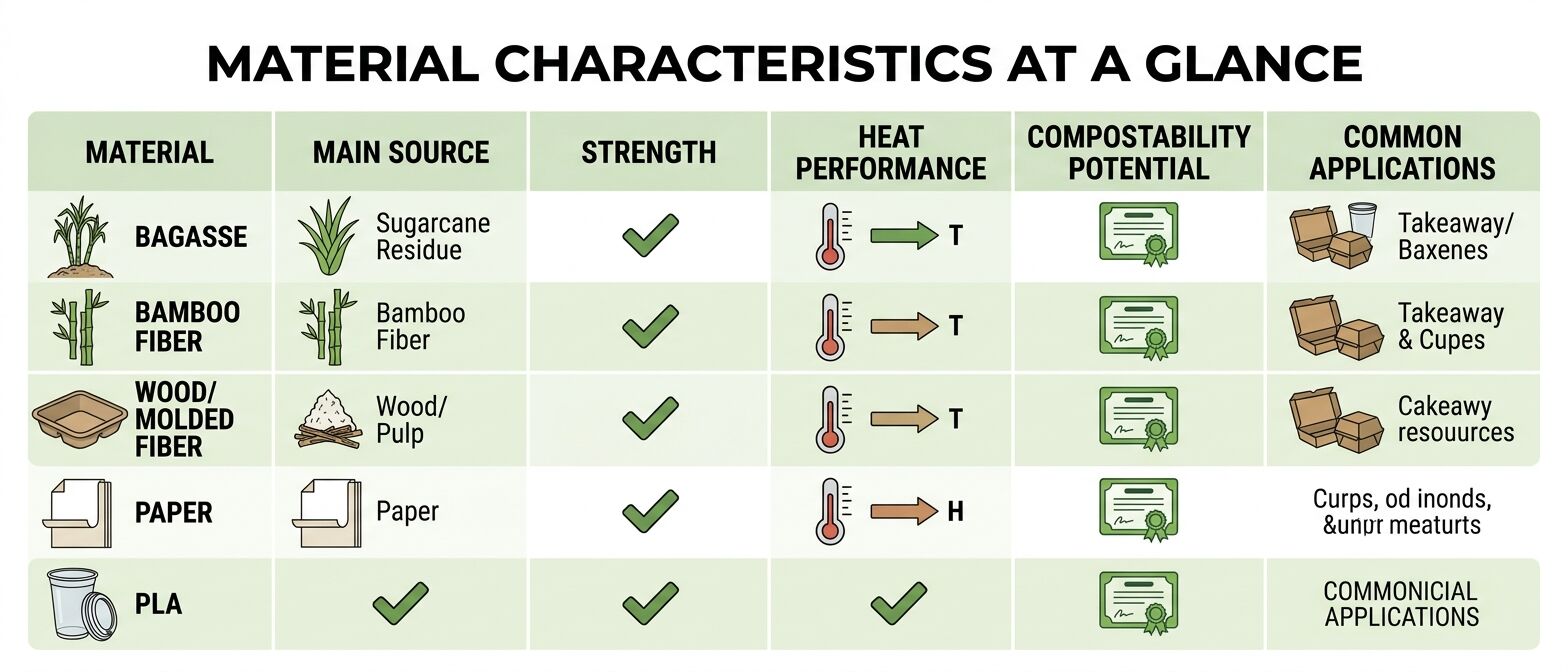
| Material | Main Source | Typical Strength | Heat Performance | Compostability Potential | Common Applications |
|---|---|---|---|---|---|
| Bagasse | Sugarcane fiber | Good | Good for many foodservice uses | Often commercially compostable when certified | Plates, bowls, containers |
| Bamboo fiber | Bamboo | Good, depending on formulation | Application-dependent | Depends on formulation/certification | Plates, bowls, trays |
| Wood/molded fiber | Cellulose/wood fiber | Good | Application-dependent | Depends on composition/coating | Trays, plates, packaging |
| Paper/paperboard | Wood/cellulose | Moderate to good | Application-dependent | Depends on coating and certification | Boxes, cups, trays |
| PLA | Plant-based polymer feedstock | Good | Generally better suited to cold applications than conventional hot-food use | Can be commercially compostable when properly certified | Cold cups, lids, containers |
These are general comparisons rather than specifications for every product.
For example, a bagasse plate with a particular fiber density may perform very differently from another manufacturer's plate of the same diameter.
Compostability vs. Biodegradability
This distinction deserves special attention.
Biodegradable generally describes the ability of a material to be broken down by biological activity under suitable conditions.
Compostable is a more specific concept. A certified compostable product must meet defined requirements for disintegration, biodegradation and other environmental criteria within specified composting conditions.
In North America, BPI uses ASTM D6400 as the base standard for its commercial compostability certification and also has certification schemes covering certain fiber-based products under ASTM D6868.
BPI also distinguishes commercial-only compostability from commercial-and-home compostability.
Therefore, a buyer should never assume:
Plant-based = biodegradable = compostable = home compostable.
These are different claims.
Advantages
Bagasse
The main advantage of bagasse is its combination of plant-fiber sourcing and foodservice practicality.
It can be molded into relatively rigid products without relying on conventional plastic as the primary structural material.
For restaurant groups, bagasse can provide a practical solution for plates, bowls and takeaway containers.
Bamboo Fiber
Bamboo fiber offers a distinctive renewable-material story and can be attractive for brands emphasizing natural materials.
It can also be molded into a range of shapes and designs.
For premium catering, hospitality and lifestyle-oriented food brands, the appearance of the finished tableware may be an important purchasing factor.
Paper and Paperboard
Paper has an established global supply chain and can be printed effectively.
For branded takeaway packaging, this is a major advantage.
Restaurants can use custom printing to integrate:
Logos
Brand colors
Product information
Recycling instructions
Marketing messages
PLA
PLA can provide transparency and a familiar plastic-like appearance while using a biobased polymer.
This makes it particularly useful for cold beverages and applications where product visibility matters.
Limitations
No material is perfect.
Bagasse and Bamboo Fiber
Plant-fiber products can absorb moisture or lose strength depending on food type, temperature and exposure time.
A buyer serving soup, oily food or high-moisture meals should test the actual product rather than relying on a generic material description.
Paper
Paper requires careful consideration when exposed to liquids and grease.
Coatings can improve performance, but coatings may also affect recyclability or compostability.
This is particularly important when buyers are trying to make "plastic-free" or "compostable" claims.
PLA
PLA is not a universal replacement for all plastics.
Its temperature performance can limit certain hot-food applications, depending on the product design and grade.
More importantly, compostable PLA requires an appropriate end-of-life system. A commercially compostable PLA product is not automatically suitable for home composting.
Sustainability Claims
Environmental claims must match the actual product.
For example, a package made primarily from paper may still contain a barrier coating that changes its recycling or compostability profile.
Similarly, a product described as "bamboo" may contain additional materials.
Professional buyers should therefore ask for documentation rather than relying on marketing terminology.
Common Applications
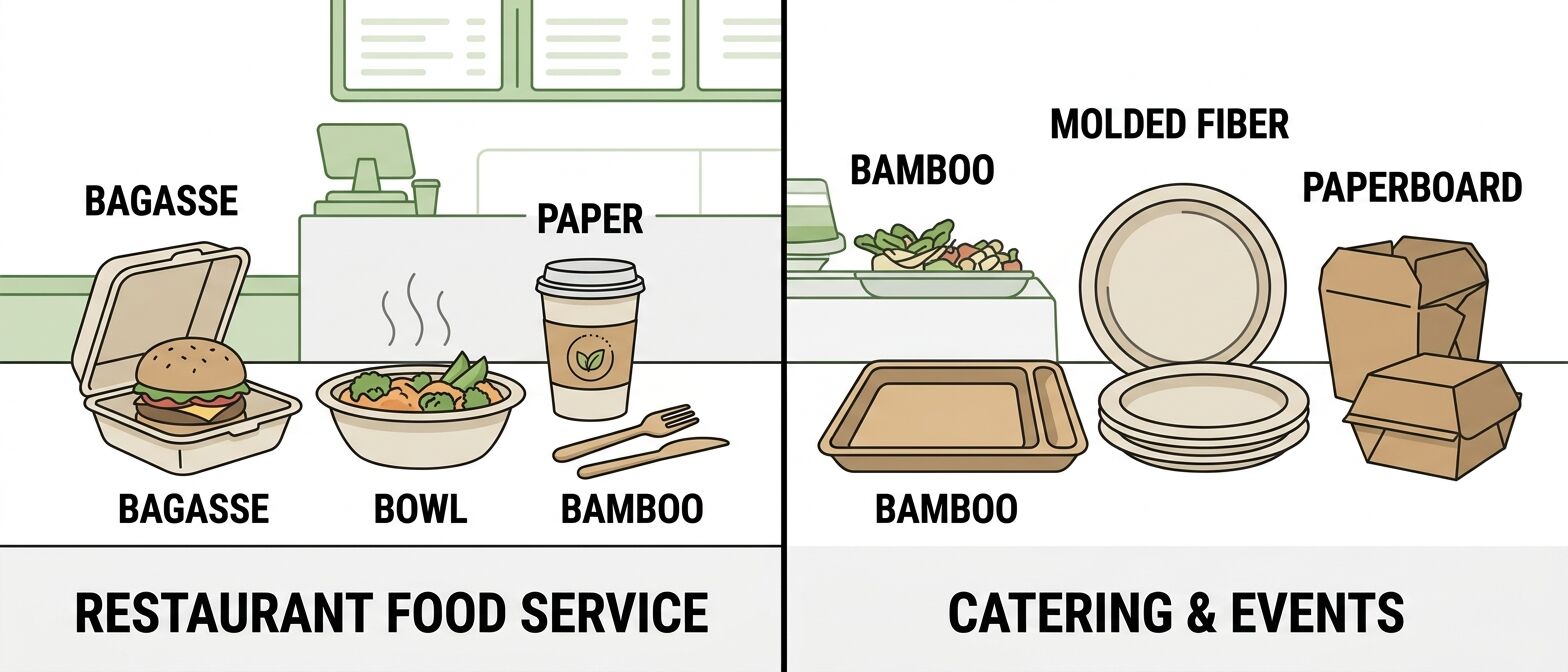
Restaurants
Restaurant chains commonly use sustainable materials for:
Plates
Bowls
Cutlery
Burger boxes
Food trays
Takeaway containers
For high-volume operations, consistency is often more important than choosing the newest material.
Food Delivery
Food delivery requires packaging to withstand transportation.
A good sustainable container should maintain:
Structural integrity
Leak resistance
Stackability
Heat performance
Grease resistance
For example, bagasse may be appropriate for a takeaway meal, while a PLA cup may be better suited to a cold beverage.
Catering and Events
Catering companies often prioritize appearance, stacking efficiency and large-volume availability.
Bamboo fiber or premium molded-fiber products may be selected when appearance is particularly important.
Distributors and Wholesalers
Distributors need to consider product breadth and inventory efficiency.
A standard range of bagasse plates and bowls may be easier to sell across multiple restaurant customers than highly customized products.
For private-label programs, however, customized packaging and branding can create differentiation.
Comparison with Other Materials
The question is not always "Which eco-friendly material is best?"
A more useful question is:
Which material is most appropriate for this application?
| Application | Recommended Material to Consider | Why |
|---|---|---|
| Cold drinks | PLA or coated paper | Transparency or established paper structure |
| Takeaway meals | Bagasse/molded fiber | Strength and foodservice suitability |
| Burger packaging | Bagasse or paperboard | Structural support and branding |
| Salads | PLA or molded fiber | Product visibility or rigidity |
| Catering plates | Bagasse or bamboo fiber | Presentation and disposable convenience |
| Printed takeaway boxes | Paper/paperboard | Strong printing capability |
| Heavy wet food | Specialized molded fiber | Structural and moisture requirements |
| Large-volume standard tableware | Bagasse | Established product range and scalability |
The table should be treated as a starting point, not a substitute for application testing.
What Buyers Should Consider
1. Food-Contact Safety
Sustainability does not replace food safety.
For products intended to touch food, buyers should confirm that the finished article complies with the relevant food-contact requirements in the destination market.
In the EU, food-contact materials must meet Regulation (EC) No 1935/2004 and applicable GMP requirements.
In the United States, the FDA regulates food-contact substances according to their intended use and applicable authorization pathways.
The exact requirements can depend on:
Food type
Temperature
Contact duration
Repeated or single use
Coatings
Additives
2. Certification
If compostability is part of your product claim, ask for certification that covers the finished product.
For North American buyers, BPI certification provides third-party verification against applicable ASTM compostability standards, and BPI maintains a searchable database of certified products.
For other markets, buyers should identify the applicable regional standard and certification requirements before production.
3. PFAS and Barrier Chemistry
Grease and water resistance deserve particular attention.
The U.S. FDA has stated that PFAS-containing grease-proofing substances are no longer being sold for use on paper and paperboard food packaging in the U.S., following market phase-out actions and related regulatory developments.
For buyers, this means that "grease resistant" should trigger another question:
What coating or treatment provides the resistance?
Ask the supplier to disclose the relevant coating system and provide supporting compliance documentation where required.
4. MOQ and Customization
MOQ can vary significantly according to the product.
Standard products generally have lower entry barriers because molds and production specifications already exist.
Custom products may require:
New molds
Custom dimensions
Special packaging
Custom printing
Dedicated production runs
If you are a distributor testing a new market, consider starting with standard sizes before investing in custom tooling.
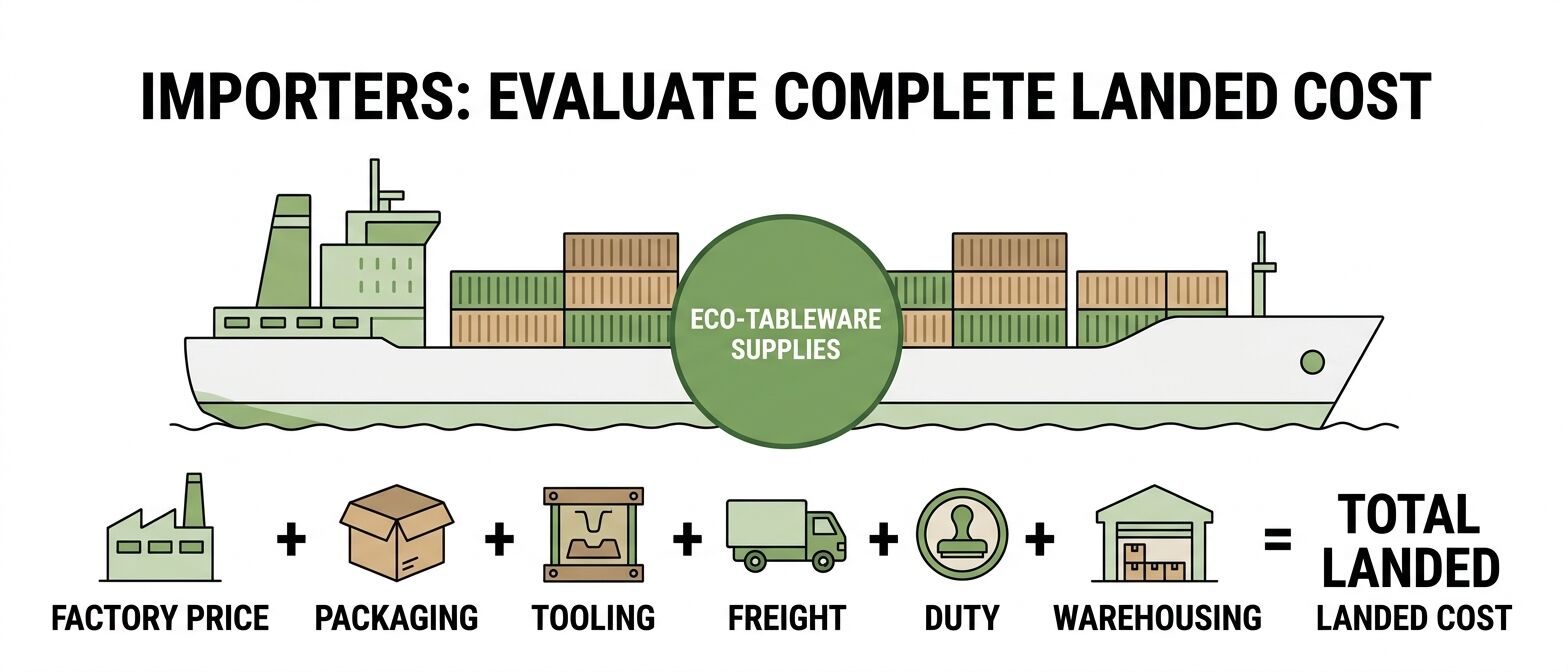
5. Total Landed Cost
Importers should compare more than the factory unit price.
Calculate:
Product + packaging + tooling + freight + duty + warehousing + expected waste = landed cost
A lightweight product with efficient carton packing can sometimes be more competitive overall even if its factory price is slightly higher.
6. End-of-Life Infrastructure
Finally, determine what happens after use.
Ask:
Is commercial composting available?
Does the local facility accept the product?
Is the product recyclable instead?
Does the coating affect disposal?
Are special collection instructions required?
The most sustainable material on paper may not be the most appropriate choice if the intended waste-management system cannot process it.
Tonchant Earth approaches sustainable tableware selection from this application-based perspective: material, product performance, compliance and intended market all need to be considered together rather than treating one material as a universal solution.
FAQ
1. What are the most common eco-friendly tableware materials?
Common choices include bagasse, bamboo fiber, molded wood pulp, paper and paperboard, PLA and other certified compostable materials.
The right choice depends on the food application, performance requirements and destination-market regulations.
2. Is bagasse better than plastic?
Bagasse can be an effective alternative to conventional plastic for many disposable foodservice applications, particularly plates, bowls and takeaway containers.
However, environmental performance depends on sourcing, manufacturing, transportation and end-of-life management. No material should be considered automatically sustainable simply because it is plant-based.
3. Is bamboo fiber tableware compostable?
It can be, but the answer depends on the specific formulation and finished product.
Buyers should ask for the material composition and relevant compostability documentation rather than assuming that all bamboo fiber products have identical end-of-life characteristics.
4. Is PLA tableware biodegradable?
PLA can biodegrade under appropriate conditions and can be used in certified compostable products. However, many PLA products are intended for controlled commercial composting rather than ordinary outdoor environments or home compost bins.
5. Are eco-friendly tableware products safe for hot food?
Some are, but not all.
Heat performance varies considerably between materials and product designs. A buyer should confirm the manufacturer's specified temperature range and test the product with the actual food application.
6. What certifications should I ask for?
The answer depends on the destination market and the product claim.
For food-contact products, request relevant food-contact compliance documentation. For compostable claims, request finished-product certification applicable to your market.
For U.S. buyers, BPI is a major third-party compostability certification program. Its commercial certification is based on ASTM D6400, with other standards used where applicable.
7. Can I customize eco-friendly tableware?
In many cases, yes.
Customization may include:
Product size
Shape
Compartments
Embossing
Packaging
Printing
Private labeling
Custom molds and packaging usually increase MOQ and initial costs, so these requirements should be discussed before quotation and sampling.
8. What is the most sustainable tableware material?
There is no single answer.
A material's environmental performance depends on its raw material, manufacturing process, product weight, transportation, service life and end-of-life pathway.
For a restaurant chain, the best option is usually the one that meets food-safety and performance requirements while fitting the available waste-management infrastructure and sustainability objectives.
Conclusion
The market for eco friendly tableware materials is becoming more diverse, but also more technically demanding.
Bagasse, bamboo fiber, molded fiber, paper, paperboard and PLA can all play useful roles in sustainable foodservice packaging. Their differences become important when buyers consider heat resistance, moisture performance, structural strength, food-contact safety, certification, customization, MOQ and end-of-life management.
For procurement teams, the most useful approach is to start with the application rather than the material.
A restaurant serving hot and oily takeaway meals may need a different solution from a coffee chain selling cold beverages. A distributor may prioritize standard sizes and stable supply, while a premium catering company may place more emphasis on appearance and customization.
Most importantly, buyers should verify claims with product-level documentation. Plant-based does not automatically mean compostable, and compostable does not automatically mean home compostable.
The future of sustainable tableware will likely be less about finding one "perfect" material and more about matching the right material to the right application, market and end-of-life system.
That is the basis for making sustainable packaging decisions that are not only environmentally responsible, but also practical for large-scale foodservice operations.
Recommended Products
 Hot News
-
What Materials Are Used in Eco-Friendly Tableware?
2026-08-26
-
How Compostable Food Packaging Is Made: From Plant Fiber to Finished Product
2026-08-20
-
What Is Bagasse and Why Is It Used in Food Packaging?
2026-07-29
-
Bagasse vs Cornstarch Food Containers: Which Is Better?
2026-07-23
-
Compostable Tableware vs Biodegradable Tableware: A Complete Buying Guide for Sustainable Food Packaging Buyers
2026-07-21
-
Complete ASTM D6400 Certification Guide: What Importers and Food Packaging Buyers Must Know
2026-07-13